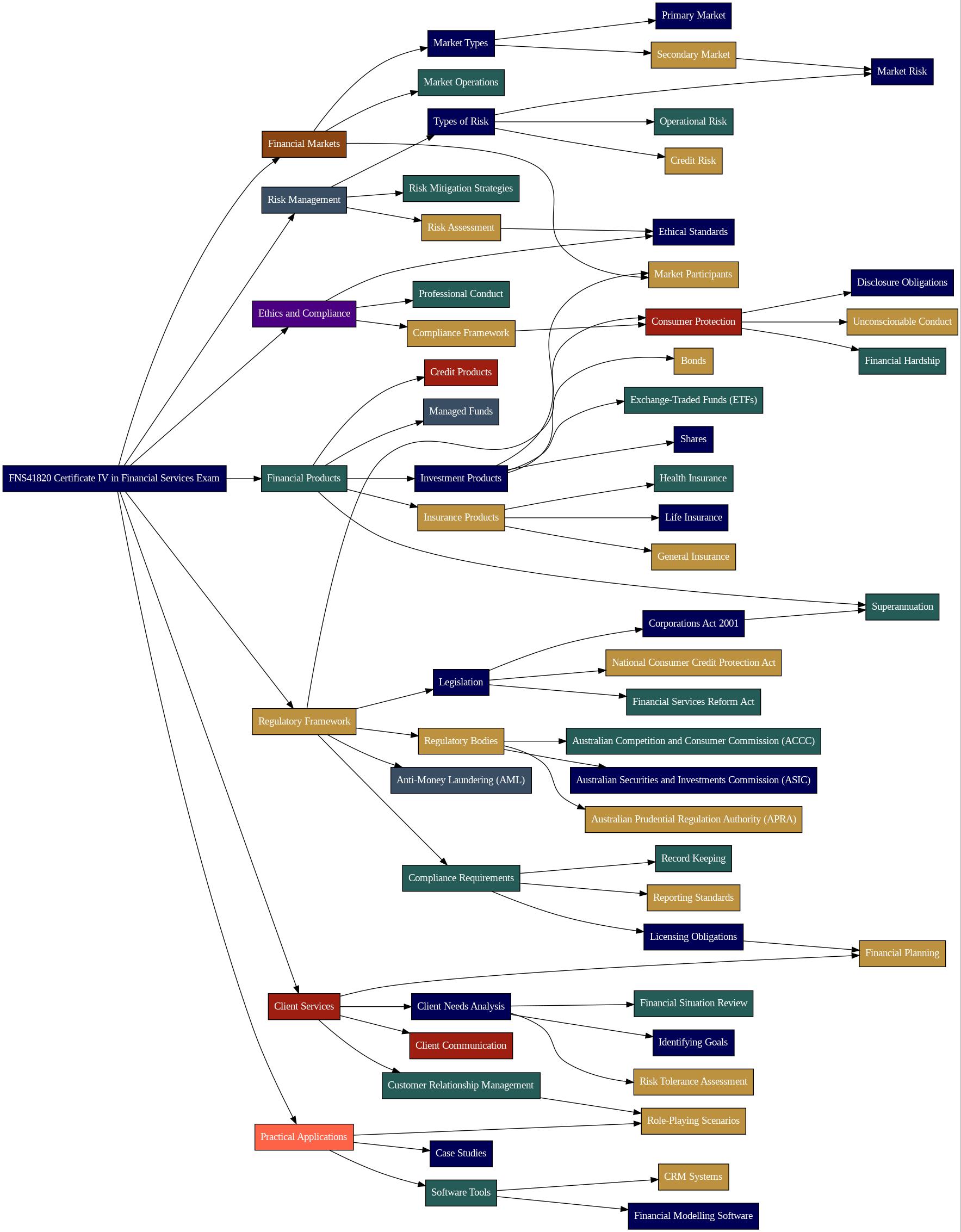
Quiz-summary
0 of 30 questions completed
Questions:
- 1
- 2
- 3
- 4
- 5
- 6
- 7
- 8
- 9
- 10
- 11
- 12
- 13
- 14
- 15
- 16
- 17
- 18
- 19
- 20
- 21
- 22
- 23
- 24
- 25
- 26
- 27
- 28
- 29
- 30
Information
Premium Practice Questions
You have already completed the quiz before. Hence you can not start it again.
Quiz is loading...
You must sign in or sign up to start the quiz.
You have to finish following quiz, to start this quiz:
Results
0 of 30 questions answered correctly
Your time:
Time has elapsed
You have reached 0 of 0 points, (0)
Categories
- Not categorized 0%
- 1
- 2
- 3
- 4
- 5
- 6
- 7
- 8
- 9
- 10
- 11
- 12
- 13
- 14
- 15
- 16
- 17
- 18
- 19
- 20
- 21
- 22
- 23
- 24
- 25
- 26
- 27
- 28
- 29
- 30
- Answered
- Review
-
Question 1 of 30
1. Question
When assessing a diverse investment portfolio, it’s essential to evaluate the various forms of risk that could impact returns. Suppose an investor holds a mix of stocks, bonds, and alternative assets. The investor is particularly concerned about market fluctuations that could significantly affect the equity portion of the holdings. In addition, potential defaults in the bond investments also raise concerns about credit risk. Given this scenario, which type of risk management strategy would be most effective in mitigating potential losses across these different asset classes?
Correct
Understanding risk in financial markets is crucial for making informed investment decisions. Financial risk can be categorized into various types, including market risk, credit risk, operational risk, and liquidity risk. Market risk refers to the potential losses due to changes in market prices, while credit risk is the risk of loss from a counterparty’s failure to meet obligations. Operational risk involves losses due to failed internal processes, people, or systems, and liquidity risk emerges when an entity cannot meet its short-term financial obligations. In assessing the risk profile of an investment portfolio, investors must analyze these risks in conjunction with their expected returns. A thorough understanding of these concepts allows investors to implement appropriate risk mitigation strategies, such as diversification or hedging. Ultimately, managing risk effectively helps to protect capital and optimize returns in a volatile financial environment.
Incorrect
Understanding risk in financial markets is crucial for making informed investment decisions. Financial risk can be categorized into various types, including market risk, credit risk, operational risk, and liquidity risk. Market risk refers to the potential losses due to changes in market prices, while credit risk is the risk of loss from a counterparty’s failure to meet obligations. Operational risk involves losses due to failed internal processes, people, or systems, and liquidity risk emerges when an entity cannot meet its short-term financial obligations. In assessing the risk profile of an investment portfolio, investors must analyze these risks in conjunction with their expected returns. A thorough understanding of these concepts allows investors to implement appropriate risk mitigation strategies, such as diversification or hedging. Ultimately, managing risk effectively helps to protect capital and optimize returns in a volatile financial environment.
-
Question 2 of 30
2. Question
Consider a scenario where a prominent financial institution has decided to invest heavily in developing cutting-edge technology for its trading operations. This institution wants to leverage algorithmic trading platforms that utilize advanced algorithms to execute trades at speeds and efficiencies unattainable by human traders. In addition to algorithmic trading, the institution is exploring the potential of blockchain technology to enhance the security and transparency of transactions. As they aim to implement these technologies, the institution is also aware of the challenges that such advancements may pose, including the need for regulatory compliance and the risk of increased market volatility. What is the primary advantage of these technological advances in the financial markets for the institution?
Correct
Technological advances in financial markets refer to the innovative technologies and systems that enhance the efficiency, transparency, and accessibility of these markets. The correct answer highlights that such technological innovations, including algorithmic trading, blockchain, and high-frequency trading, lead to significant changes in how trading occurs, information is processed, and how transactions are settled. The introduction of these technological tools has transformed the landscape of finance, allowing for rapid trading, improved risk management, and the democratization of access to financial services. Additionally, these technologies facilitate better market connectivity and integration, which challenges traditional financial intermediaries and leads to increased competition while also raising concerns regarding market stability and cybersecurity. As these technologies continue to evolve, so do the regulations and practices, prompting ongoing discussions about their implications for market participants and regulators. In essence, technological advancements not only streamline operations but also require a deeper understanding of their impact on market dynamics, participant behavior, and the overall financial ecosystem.
Incorrect
Technological advances in financial markets refer to the innovative technologies and systems that enhance the efficiency, transparency, and accessibility of these markets. The correct answer highlights that such technological innovations, including algorithmic trading, blockchain, and high-frequency trading, lead to significant changes in how trading occurs, information is processed, and how transactions are settled. The introduction of these technological tools has transformed the landscape of finance, allowing for rapid trading, improved risk management, and the democratization of access to financial services. Additionally, these technologies facilitate better market connectivity and integration, which challenges traditional financial intermediaries and leads to increased competition while also raising concerns regarding market stability and cybersecurity. As these technologies continue to evolve, so do the regulations and practices, prompting ongoing discussions about their implications for market participants and regulators. In essence, technological advancements not only streamline operations but also require a deeper understanding of their impact on market dynamics, participant behavior, and the overall financial ecosystem.
-
Question 3 of 30
3. Question
When analyzing the role of market infrastructure in the context of financial markets, it is essential to evaluate how various components interact to ensure efficient transactions. Consider a situation where a new regulatory requirement is introduced that mandates enhanced transparency in trading activities. This regulation could impact the operations of exchanges by necessitating an upgrade in their reporting systems to capture more detailed trade information. Additionally, this new requirement may also influence clearinghouses, which will now need to incorporate these reporting features into their settlement processes. As a result, how does this change in market infrastructure affect overall market efficiency, investor confidence, and the potential for systemic risk?
Correct
Market infrastructure refers to the systems, institutions, and mechanisms that facilitate the functioning of financial markets. This includes exchanges, clearinghouses, settlement systems, and regulatory frameworks. Each component plays a critical role in ensuring that transactions are executed smoothly, transparently, and fairly. For instance, exchanges provide the venue for trading securities, allowing buyers and sellers to interact directly. Clearinghouses act as intermediaries that mitigate counterparty risk by ensuring that trades are settled effectively, thereby enhancing market confidence. Furthermore, market infrastructure must comply with regulatory standards to maintain investor protection and market integrity. The interconnected nature of these components means that any disruption in one area can impact the entire financial system, which is why robust infrastructure is vital for stable market operations.
Incorrect
Market infrastructure refers to the systems, institutions, and mechanisms that facilitate the functioning of financial markets. This includes exchanges, clearinghouses, settlement systems, and regulatory frameworks. Each component plays a critical role in ensuring that transactions are executed smoothly, transparently, and fairly. For instance, exchanges provide the venue for trading securities, allowing buyers and sellers to interact directly. Clearinghouses act as intermediaries that mitigate counterparty risk by ensuring that trades are settled effectively, thereby enhancing market confidence. Furthermore, market infrastructure must comply with regulatory standards to maintain investor protection and market integrity. The interconnected nature of these components means that any disruption in one area can impact the entire financial system, which is why robust infrastructure is vital for stable market operations.
-
Question 4 of 30
4. Question
When analyzing past financial market disruptions, it’s important to extract valuable lessons that can help improve market stability for the future. Consider a situation where a sudden liquidity crisis unfolds, leading to a rapid decline in asset prices and a loss of investor confidence. In this context, reflect on the various lessons learned from such events. What would you identify as a crucial takeaway that emphasizes the need for better market practices and systemic safeguards? How could these insights influence regulatory frameworks and risk management strategies in financial markets going forward?
Correct
Financial market disruptions often reveal systemic vulnerabilities and trigger regulatory responses aimed at preventing future occurrences. One critical lesson from these disruptions is the significance of liquidity management. During times of financial distress, the market may experience a sharp decline in liquidity, making it difficult for participants to execute trades. This scenario underscores the necessity for market participants and regulatory bodies to monitor liquidity risks closely and establish robust frameworks that can offer timely support during crises. Additionally, the response to financial disruptions showcases the importance of transparency and communication among market players, regulators, and the public. Inadequate information can amplify panic and exacerbate market volatility. Lastly, the role of technology in ensuring efficient market functioning during crises cannot be understated; innovative solutions can improve transaction processes and provide necessary data insights. Understanding these lessons is essential for developing resilient financial systems that can withstand future shocks.
Incorrect
Financial market disruptions often reveal systemic vulnerabilities and trigger regulatory responses aimed at preventing future occurrences. One critical lesson from these disruptions is the significance of liquidity management. During times of financial distress, the market may experience a sharp decline in liquidity, making it difficult for participants to execute trades. This scenario underscores the necessity for market participants and regulatory bodies to monitor liquidity risks closely and establish robust frameworks that can offer timely support during crises. Additionally, the response to financial disruptions showcases the importance of transparency and communication among market players, regulators, and the public. Inadequate information can amplify panic and exacerbate market volatility. Lastly, the role of technology in ensuring efficient market functioning during crises cannot be understated; innovative solutions can improve transaction processes and provide necessary data insights. Understanding these lessons is essential for developing resilient financial systems that can withstand future shocks.
-
Question 5 of 30
5. Question
When analyzing the valuation of a corporate bond, you discover that the market interest rate has increased significantly since the bond was initially issued. This bond pays a fixed interest rate of 5% annually and has a face value of $1,000 with 10 years remaining until maturity. Given that the market interest rates are now at 7%, how should this impact the valuation of the bond? Consider how the change in interest rates affects the present value of the bond’s cash flows and the implications for investors looking to buy or sell this bond in the current market.
Correct
Valuation of financial instruments involves assessing the present value of future cash flows that the instrument is expected to generate. This requires an understanding of the nature of the cash flows, the timing, and the risk associated with those cash flows. A bond, for instance, offers periodic interest payments and a return of principal at maturity, which can be valued using discounting techniques. The present value can be calculated using the formula: PV = C / (1 + r)^n + F / (1 + r)^N Where: PV = Present Value C = Cash flow (coupon payment) F = Face value (lump sum at maturity) r = Discount rate (market interest rate) n = Number of periods until cash flow occurs N = Total number of periods The complexity in valuation arises from market conditions, interest rates changes, and the issuer’s credit quality impacting the discount rate. Investors must adjust their expectations accordingly, often using benchmarks such as government bond yields to gauge fair value. A thorough understanding of these factors is crucial as they significantly influence investment decisions and portfolio management strategies.
Incorrect
Valuation of financial instruments involves assessing the present value of future cash flows that the instrument is expected to generate. This requires an understanding of the nature of the cash flows, the timing, and the risk associated with those cash flows. A bond, for instance, offers periodic interest payments and a return of principal at maturity, which can be valued using discounting techniques. The present value can be calculated using the formula: PV = C / (1 + r)^n + F / (1 + r)^N Where: PV = Present Value C = Cash flow (coupon payment) F = Face value (lump sum at maturity) r = Discount rate (market interest rate) n = Number of periods until cash flow occurs N = Total number of periods The complexity in valuation arises from market conditions, interest rates changes, and the issuer’s credit quality impacting the discount rate. Investors must adjust their expectations accordingly, often using benchmarks such as government bond yields to gauge fair value. A thorough understanding of these factors is crucial as they significantly influence investment decisions and portfolio management strategies.
-
Question 6 of 30
6. Question
When assessing the behavior and impact of different types of investors within the financial markets, it’s crucial to distinguish between retail and institutional investors. Consider a scenario where a significant market event occurs, prompting a rapid shift in stock prices. How would the reactions of these two investor types differ, particularly in terms of strategy and influence on the market? Furthermore, evaluate how the differences in information access and resource allocation might affect their respective actions during this event.
Correct
Investors in financial markets are typically categorized into two main groups: retail and institutional investors. Retail investors are individual investors who purchase securities for their personal accounts, while institutional investors are organizations that invest large sums of money on behalf of clients, such as pension funds, mutual funds, and hedge funds. One of the key distinctions between these two types of investors is the level of market influence and the approach to investment strategies. Institutional investors often have access to more comprehensive research, advanced tools, and greater negotiating power due to the volume of their trades, allowing them to impact market movements more significantly. Moreover, retail investors may find themselves at a disadvantage due to a lack of resources and market information. They tend to follow trends and may not have the same level of insight into market conditions that institutional investors possess. This fundamental difference leads to varied investment behaviors, goals, and risk tolerances between the two investor types. Understanding these distinctions is crucial for grasping how market dynamics can evolve and how different groups react to changes within the financial landscape, thus informing strategies for both investment and risk management.
Incorrect
Investors in financial markets are typically categorized into two main groups: retail and institutional investors. Retail investors are individual investors who purchase securities for their personal accounts, while institutional investors are organizations that invest large sums of money on behalf of clients, such as pension funds, mutual funds, and hedge funds. One of the key distinctions between these two types of investors is the level of market influence and the approach to investment strategies. Institutional investors often have access to more comprehensive research, advanced tools, and greater negotiating power due to the volume of their trades, allowing them to impact market movements more significantly. Moreover, retail investors may find themselves at a disadvantage due to a lack of resources and market information. They tend to follow trends and may not have the same level of insight into market conditions that institutional investors possess. This fundamental difference leads to varied investment behaviors, goals, and risk tolerances between the two investor types. Understanding these distinctions is crucial for grasping how market dynamics can evolve and how different groups react to changes within the financial landscape, thus informing strategies for both investment and risk management.
-
Question 7 of 30
7. Question
When you are faced with a decision about entering a trade based on historical price movements, it’s essential to consider various technical analysis tools that can assist in forecasting market behavior. Imagine you are analyzing a stock that has recently shown significant volatility, demonstrating both upward surges and downward corrections. You observe that certain chart patterns recur during these fluctuations, and the stock frequently bounces off specific support and resistance levels. As you contemplate the proper strategy to enter this market, which technical analysis concept should primarily guide your decision-making process?
Correct
Technical analysis is a method used to evaluate and predict the future movements of an asset’s price based on historical market data, primarily focusing on price and volume. This approach relies on the idea that historical price movements can provide insight into future behavior since market sentiment often drives price changes. One key tool in technical analysis is the use of charts, such as candlestick charts, to visualize price action over a specified time frame. Traders utilize patterns in these charts, such as head and shoulders, flags, and triangles, to determine potential reversal points or continuation trends. Additionally, various technical indicators, like moving averages and Relative Strength Index (RSI), help traders gauge momentum and overbought or oversold conditions. Ultimately, technical analysis requires a nuanced understanding of market psychology and the ability to interpret complex data patterns, rather than merely relying on historical performance or fundamental factors. Successful traders often combine elements of technical analysis with risk management strategies to optimize their trading decisions and capitalize on potential market movements.
Incorrect
Technical analysis is a method used to evaluate and predict the future movements of an asset’s price based on historical market data, primarily focusing on price and volume. This approach relies on the idea that historical price movements can provide insight into future behavior since market sentiment often drives price changes. One key tool in technical analysis is the use of charts, such as candlestick charts, to visualize price action over a specified time frame. Traders utilize patterns in these charts, such as head and shoulders, flags, and triangles, to determine potential reversal points or continuation trends. Additionally, various technical indicators, like moving averages and Relative Strength Index (RSI), help traders gauge momentum and overbought or oversold conditions. Ultimately, technical analysis requires a nuanced understanding of market psychology and the ability to interpret complex data patterns, rather than merely relying on historical performance or fundamental factors. Successful traders often combine elements of technical analysis with risk management strategies to optimize their trading decisions and capitalize on potential market movements.
-
Question 8 of 30
8. Question
Consider a scenario where a major investment firm has recently implemented algorithmic trading in its operations. This technology allows them to execute trades at high speeds and with precision, utilizing complex algorithms to determine optimal buying and selling points. As a result, their trading strategies have become significantly more efficient, allowing them to capitalize on market movements that occur in fractions of a second. However, this change has also raised concerns among regulators about market volatility and the potential for unfair advantages over traditional investors. In light of these developments, how would you describe the overall impact of technological advancements like algorithmic trading on the efficiency and integrity of financial markets?
Correct
Technological advances in financial markets have created a transformative shift in how transactions are executed, how information is disseminated, and how risks are managed. One significant development is the rise of algorithmic trading, which uses complex algorithms to automate trading decisions. This has led to increased market efficiency, as trades can be executed at speeds and volumes far beyond human capability. Furthermore, technologies such as blockchain have enhanced transparency and security in transactions, minimizing the potential for fraud and increasing investor confidence. This environment benefits not only institutional investors but individual traders as well. However, these advances have also introduced challenges, such as increased market volatility and the potential for technological failures. Understanding how these innovations impact trading dynamics, investment strategies, and regulatory frameworks is crucial for anyone involved in financial markets today.
Incorrect
Technological advances in financial markets have created a transformative shift in how transactions are executed, how information is disseminated, and how risks are managed. One significant development is the rise of algorithmic trading, which uses complex algorithms to automate trading decisions. This has led to increased market efficiency, as trades can be executed at speeds and volumes far beyond human capability. Furthermore, technologies such as blockchain have enhanced transparency and security in transactions, minimizing the potential for fraud and increasing investor confidence. This environment benefits not only institutional investors but individual traders as well. However, these advances have also introduced challenges, such as increased market volatility and the potential for technological failures. Understanding how these innovations impact trading dynamics, investment strategies, and regulatory frameworks is crucial for anyone involved in financial markets today.
-
Question 9 of 30
9. Question
During a portfolio review, you encounter two investment strategies: growth investing and value investing. Growth investing emphasizes companies that have the potential for rapid expansion, often represented by higher price-to-earnings ratios, while value investing focuses on stocks that appear undervalued based on fundamental analysis. Given a market scenario where economic conditions are volatile and interest rates are fluctuating, which strategy would likely provide a more stable return over time, and why is it critical for investors to understand the underlying principles governing these investment approaches?
Correct
To analyze the risk-return profile of various investment strategies, one must consider the typical characteristics associated with growth investing versus value investing. Growth investing focuses on companies that are expected to grow at an above-average rate compared to their industry or the overall market, often leading to higher volatility and potentially significant returns if the company meets or exceeds growth expectations. Conversely, value investing targets undervalued companies that are believed to be trading for less than their intrinsic or book value, generally resulting in lower volatility and steady returns as the market corrects its pricing over time. Understanding these differing approaches is essential for investors when they align their strategies with personal risk tolerance and market conditions. Hence, the implications of choosing one strategy over the other can drastically influence an investor’s portfolio performance and risk exposure.
Incorrect
To analyze the risk-return profile of various investment strategies, one must consider the typical characteristics associated with growth investing versus value investing. Growth investing focuses on companies that are expected to grow at an above-average rate compared to their industry or the overall market, often leading to higher volatility and potentially significant returns if the company meets or exceeds growth expectations. Conversely, value investing targets undervalued companies that are believed to be trading for less than their intrinsic or book value, generally resulting in lower volatility and steady returns as the market corrects its pricing over time. Understanding these differing approaches is essential for investors when they align their strategies with personal risk tolerance and market conditions. Hence, the implications of choosing one strategy over the other can drastically influence an investor’s portfolio performance and risk exposure.
-
Question 10 of 30
10. Question
When you are faced with an analysis of how market makers influence the trading environment, consider the implications of their role in providing liquidity. A market maker operates by quoting both buy and sell prices for a security, effectively making markets for that asset. This creates a more accessible trading environment for investors. However, the actions of market makers can also lead to varying implications for market dynamics, particularly concerning price formation and the bid-ask spread. As you reflect on the broader impacts, how would you assess the significance of a market maker’s quotes in shaping market liquidity and efficiency? Discuss the ramifications of their involvement from the perspective of both liquidity provisioning and the potential risks associated with their inventory management.
Correct
Market makers play a crucial role in maintaining liquidity in financial markets by facilitating the buying and selling of securities. They do this by continuously providing quotes for various securities, thereby ensuring that there is always a buyer and seller available. In the context of order flow, market makers can influence the spread – the difference between the bid (the price buyers are willing to pay) and the ask (the price sellers want). By adjusting the quotes they provide based on supply and demand dynamics, market makers contribute to price stabilization and market efficiency. They take on the inventory risk, which can lead to profitability when their buying and selling strategies align well with market movements. However, the presence of market makers can also lead to considerations regarding market manipulation, as their significant influence on supply and demand might create opportunities for unethical practices. Understanding the nuances of their operational strategies is essential for comprehending both market behaviors and the overall structure of financial markets.
Incorrect
Market makers play a crucial role in maintaining liquidity in financial markets by facilitating the buying and selling of securities. They do this by continuously providing quotes for various securities, thereby ensuring that there is always a buyer and seller available. In the context of order flow, market makers can influence the spread – the difference between the bid (the price buyers are willing to pay) and the ask (the price sellers want). By adjusting the quotes they provide based on supply and demand dynamics, market makers contribute to price stabilization and market efficiency. They take on the inventory risk, which can lead to profitability when their buying and selling strategies align well with market movements. However, the presence of market makers can also lead to considerations regarding market manipulation, as their significant influence on supply and demand might create opportunities for unethical practices. Understanding the nuances of their operational strategies is essential for comprehending both market behaviors and the overall structure of financial markets.
-
Question 11 of 30
11. Question
When you are faced with analyzing market dynamics, consider a scenario where an unexpected political event leads to heightened uncertainty in the financial markets. As a financial analyst, you must evaluate how this event might influence the behavior of different market participants. In what way is it likely to affect the balance between buyers and sellers, and what implications does this have for asset prices? Understanding these interactions can help in formulating investment strategies. Which of the following best captures the expected outcome in such a volatile situation, taking into account the interplay of investor sentiment and market conditions?
Correct
Market dynamics refers to the forces that impact the supply and demand of assets, which in turn influences their prices. A market that is characterized by high volatility often experiences rapid price changes due to a mix of factors including investor sentiment, economic indicators, and market liquidity. When analyzing market behavior, it is essential to consider how different types of market participants, such as speculators, hedgers, and arbitrageurs, affect market stability. For instance, a scenario where a significant news event causes a sudden shift in investor sentiment can lead to increased buying or selling pressure. This, in turn, results in price fluctuations. An understanding of these dynamics helps investors navigate the financial markets effectively, as they can anticipate potential changes in market conditions and make informed decisions accordingly. Recognizing that market dynamics are not static, investors must remain vigilant to shifting trends that could indicate future price movements, especially during periods of uncertainty or turmoil.
Incorrect
Market dynamics refers to the forces that impact the supply and demand of assets, which in turn influences their prices. A market that is characterized by high volatility often experiences rapid price changes due to a mix of factors including investor sentiment, economic indicators, and market liquidity. When analyzing market behavior, it is essential to consider how different types of market participants, such as speculators, hedgers, and arbitrageurs, affect market stability. For instance, a scenario where a significant news event causes a sudden shift in investor sentiment can lead to increased buying or selling pressure. This, in turn, results in price fluctuations. An understanding of these dynamics helps investors navigate the financial markets effectively, as they can anticipate potential changes in market conditions and make informed decisions accordingly. Recognizing that market dynamics are not static, investors must remain vigilant to shifting trends that could indicate future price movements, especially during periods of uncertainty or turmoil.
-
Question 12 of 30
12. Question
In the context of financial markets, it is essential to understand the roles of both primary and secondary markets. Imagine that a new technology startup aims to raise capital for its operations and decides to issue shares for the first time. After successfully selling these shares to initial investors, the company goes public. Subsequently, these shares are traded among investors on a stock exchange. How would you best describe the significance of both markets in this scenario, particularly focusing on their functions and the implications for investors?
Correct
Financial markets serve as platforms for the buying and selling of securities, currencies, and other financial instruments, facilitating capital flow within the economy. They can broadly be categorized into primary and secondary markets. In a primary market, new securities are issued for the first time, allowing companies to raise capital directly from investors. Conversely, the secondary market deals with the resale of existing securities, where investors trade previously issued assets among themselves. The structure of financial markets enables price discovery, which is the process through which the price of an asset is determined through supply and demand dynamics. Additionally, these markets provide liquidity, allowing investors to buy and sell with ease, reducing transaction costs and risks associated with holding financial assets. Thus, the primary and secondary markets together contribute significantly to the overall efficiency and functionality of financial systems. Understanding these distinctions and their implications is crucial for anyone participating in or analyzing financial markets.
Incorrect
Financial markets serve as platforms for the buying and selling of securities, currencies, and other financial instruments, facilitating capital flow within the economy. They can broadly be categorized into primary and secondary markets. In a primary market, new securities are issued for the first time, allowing companies to raise capital directly from investors. Conversely, the secondary market deals with the resale of existing securities, where investors trade previously issued assets among themselves. The structure of financial markets enables price discovery, which is the process through which the price of an asset is determined through supply and demand dynamics. Additionally, these markets provide liquidity, allowing investors to buy and sell with ease, reducing transaction costs and risks associated with holding financial assets. Thus, the primary and secondary markets together contribute significantly to the overall efficiency and functionality of financial systems. Understanding these distinctions and their implications is crucial for anyone participating in or analyzing financial markets.
-
Question 13 of 30
13. Question
Consider a scenario where a significant number of depositors at a local bank become anxious due to rumors of financial instability within the institution. As a result, they rush to withdraw their savings simultaneously. This behavior triggers a wave of similar actions at other banks, leading to widespread financial distress across the banking sector. Historically, this situation reflects the dynamics experienced during the Great Depression. How did the widespread bank runs during this period illustrate the fundamental principles of trust within financial markets and the effects of regulatory measures following economic crises?
Correct
The phenomenon of bank runs during the Great Depression occurred when a large number of customers withdrew their deposits simultaneously due to fears that their bank would fail. This situation exemplified the fragility of trust in banking systems, as banks operate on the principle of fractional reserve banking. When too many depositors demanded their funds at once, the banks, which had only a fraction of deposits on hand, could not satisfy all withdrawal requests, leading to insolvency. The cascading effects of these runs led to widespread bank failures, which further exacerbated the economic downturn. The government response included the establishment of the Federal Deposit Insurance Corporation (FDIC) in 1933, aimed at restoring trust in the financial system by insuring deposits. This historical episode underscores the importance of confidence in financial markets and the need for regulatory measures to stabilize banking operations.
Incorrect
The phenomenon of bank runs during the Great Depression occurred when a large number of customers withdrew their deposits simultaneously due to fears that their bank would fail. This situation exemplified the fragility of trust in banking systems, as banks operate on the principle of fractional reserve banking. When too many depositors demanded their funds at once, the banks, which had only a fraction of deposits on hand, could not satisfy all withdrawal requests, leading to insolvency. The cascading effects of these runs led to widespread bank failures, which further exacerbated the economic downturn. The government response included the establishment of the Federal Deposit Insurance Corporation (FDIC) in 1933, aimed at restoring trust in the financial system by insuring deposits. This historical episode underscores the importance of confidence in financial markets and the need for regulatory measures to stabilize banking operations.
-
Question 14 of 30
14. Question
In the context of analyzing the roles within financial markets, consider a scenario where a new retail investor is looking to navigate the complexities of trading stocks. This investor has limited experience and is primarily driven by personal financial goals rather than a comprehensive understanding of the market. Meanwhile, institutional investors have more resources and market intelligence at their disposal, allowing them to execute larger trades and potentially influence market direction. Additionally, market makers are present to ensure liquidity and provide a balanced trading environment. Given this scenario, which group of market participants would most likely offer the most significant influence over price movements and market stability?
Correct
Market participants play a critical role in financial markets by providing liquidity, setting prices, and facilitating transactions. Among these participants, retail investors are individuals who buy and sell securities for their personal accounts, typically in smaller volumes compared to institutional investors. Institutional investors, such as mutual funds, pension funds, and hedge funds, manage large sums of money and can influence market dynamics significantly due to their large-scale transactions. Another important group includes market makers, which are firms or individuals that commit to continuously buying and selling specific securities at specified prices, thus maintaining liquidity in the market. Their activity can narrow bid-ask spreads and enhance trading efficiency. Understanding the distinctions between these participants is vital for grasping market behavior. Retail investors often operate with less information and face different incentives than institutional investors, who utilize sophisticated strategies and have access to more comprehensive market data. Market makers, meanwhile, thrive on volume and manage risks associated with holding inventories of stocks. Therefore, recognizing the various roles and interactions of these market participants is essential for those studying financial markets, as their behavior collectively influences price discovery, market efficiency, and overall market health.
Incorrect
Market participants play a critical role in financial markets by providing liquidity, setting prices, and facilitating transactions. Among these participants, retail investors are individuals who buy and sell securities for their personal accounts, typically in smaller volumes compared to institutional investors. Institutional investors, such as mutual funds, pension funds, and hedge funds, manage large sums of money and can influence market dynamics significantly due to their large-scale transactions. Another important group includes market makers, which are firms or individuals that commit to continuously buying and selling specific securities at specified prices, thus maintaining liquidity in the market. Their activity can narrow bid-ask spreads and enhance trading efficiency. Understanding the distinctions between these participants is vital for grasping market behavior. Retail investors often operate with less information and face different incentives than institutional investors, who utilize sophisticated strategies and have access to more comprehensive market data. Market makers, meanwhile, thrive on volume and manage risks associated with holding inventories of stocks. Therefore, recognizing the various roles and interactions of these market participants is essential for those studying financial markets, as their behavior collectively influences price discovery, market efficiency, and overall market health.
-
Question 15 of 30
15. Question
Consider a scenario where an investor is considering two portfolios: Portfolio A, characterized by a well-diversified mix of equities and bonds, and Portfolio B, consisting solely of high-growth tech stocks. The investor is aware that while Portfolio B has the potential for higher returns, it also carries a higher level of volatility compared to Portfolio A. As the investor evaluates these options, what is the most likely impact of choosing Portfolio B over Portfolio A in terms of risk and potential returns?
Correct
Risk and return are fundamental concepts in finance that illustrate the relationship between the potential risk associated with an investment and the expected return on that investment. Generally, higher levels of risk are associated with higher potential returns. This principle is rooted in the idea that investors are willing to take on greater risks in exchange for greater rewards. For instance, equities are typically considered more volatile than bonds, meaning they can offer higher returns over the long term but also come with a greater potential for loss. In evaluating investments, it is critical for individuals and organizations to assess their risk tolerance, as this will influence their investment choices. Moreover, diversification plays a key role in managing risk; by spreading investments across various asset classes, investors can mitigate the impact of underperformance in any one area. Understanding the risk-return trade-off is essential for making informed decisions in financial markets.
Incorrect
Risk and return are fundamental concepts in finance that illustrate the relationship between the potential risk associated with an investment and the expected return on that investment. Generally, higher levels of risk are associated with higher potential returns. This principle is rooted in the idea that investors are willing to take on greater risks in exchange for greater rewards. For instance, equities are typically considered more volatile than bonds, meaning they can offer higher returns over the long term but also come with a greater potential for loss. In evaluating investments, it is critical for individuals and organizations to assess their risk tolerance, as this will influence their investment choices. Moreover, diversification plays a key role in managing risk; by spreading investments across various asset classes, investors can mitigate the impact of underperformance in any one area. Understanding the risk-return trade-off is essential for making informed decisions in financial markets.
-
Question 16 of 30
16. Question
Consider a scenario where a sudden political crisis erupts in a major oil-producing country. Investors are concerned about potential disruptions in oil supply and the implications this may have on global oil prices. How might this geopolitical event impact financial markets beyond just the commodities sector? Additionally, what factors should investors consider when reassessing their portfolios in light of such developments, particularly regarding the shift in investor sentiment and potential changes in monetary policy?
Correct
Geopolitical events significantly influence financial markets by altering investor sentiment, impacting supply chains, and affecting regulatory environments. For instance, political instability in a region rich in natural resources can lead to uncertainty about resource availability, causing prices to fluctuate. Investors might react by reallocating their portfolios, seeking safe-haven assets like gold or Treasury bonds. Additionally, geopolitical tensions can trigger changes in monetary policy, as central banks might adjust interest rates in response to economic conditions exacerbated by such events. Such reactions illustrate the cause-and-effect relationship between geopolitical dynamics and financial markets, which can result in volatility and shifts in market trends. Understanding these connections enables investors to anticipate potential market movements and make informed decisions in times of crisis. Overall, the influence of geopolitical events on financial markets underscores the interconnectedness of global economics and the need for financial professionals to stay informed about world affairs.
Incorrect
Geopolitical events significantly influence financial markets by altering investor sentiment, impacting supply chains, and affecting regulatory environments. For instance, political instability in a region rich in natural resources can lead to uncertainty about resource availability, causing prices to fluctuate. Investors might react by reallocating their portfolios, seeking safe-haven assets like gold or Treasury bonds. Additionally, geopolitical tensions can trigger changes in monetary policy, as central banks might adjust interest rates in response to economic conditions exacerbated by such events. Such reactions illustrate the cause-and-effect relationship between geopolitical dynamics and financial markets, which can result in volatility and shifts in market trends. Understanding these connections enables investors to anticipate potential market movements and make informed decisions in times of crisis. Overall, the influence of geopolitical events on financial markets underscores the interconnectedness of global economics and the need for financial professionals to stay informed about world affairs.
-
Question 17 of 30
17. Question
When analyzing a situation where a new technology firm is preparing to enter the stock market, you discover that potential investors are concerned about the volatility of the stock. They express fears that without sufficient liquidity, they might struggle to buy or sell shares at desirable prices. In this context, how would you explain the role of market makers in alleviating these concerns? Consider how their functions might positively impact investor behavior and overall market stability.
Correct
Market makers play a crucial role in enhancing the liquidity of financial markets by being ready to buy and sell securities at any time. Their function involves continuously quoting prices at which they are willing to buy (bid) and sell (ask) an asset, facilitating smoother trading experiences for participants. In essence, they bridge the gap between buyers and sellers, ensuring transactions can occur quickly and without significant price fluctuations. This liquidity provision allows for more efficient price discovery and reduces the bid-ask spread, which is the difference between the prices at which a market maker is willing to purchase and sell a security. Furthermore, while market makers earn profits from the difference between these prices, they also take on the risk of holding inventories of securities that may fluctuate in value. This dynamic becomes particularly relevant in volatile markets where the balance of buy and sell orders can shift drastically within short timeframes, emphasizing the importance of market makers in maintaining overall market stability and reducing the likelihood of extreme price movements.
Incorrect
Market makers play a crucial role in enhancing the liquidity of financial markets by being ready to buy and sell securities at any time. Their function involves continuously quoting prices at which they are willing to buy (bid) and sell (ask) an asset, facilitating smoother trading experiences for participants. In essence, they bridge the gap between buyers and sellers, ensuring transactions can occur quickly and without significant price fluctuations. This liquidity provision allows for more efficient price discovery and reduces the bid-ask spread, which is the difference between the prices at which a market maker is willing to purchase and sell a security. Furthermore, while market makers earn profits from the difference between these prices, they also take on the risk of holding inventories of securities that may fluctuate in value. This dynamic becomes particularly relevant in volatile markets where the balance of buy and sell orders can shift drastically within short timeframes, emphasizing the importance of market makers in maintaining overall market stability and reducing the likelihood of extreme price movements.
-
Question 18 of 30
18. Question
Consider a scenario where a financial analyst is observing a significant change in the stock price of a technology company after a successful product launch, despite previous negative sentiment surrounding the company’s performance. The analyst notes that investor behavior has shifted dramatically, with many retail investors now showing a keen interest in buying shares. In the context of behavioral finance, what could be the underlying reason for this sudden change in market sentiment?
Correct
Market sentiment refers to the overall attitude of investors toward a particular security or financial market, which can significantly influence price movements and trading behavior. This concept is deeply intertwined with behavioral finance, which examines how psychological factors and emotions affect investors’ decisions and market dynamics. For instance, positive sentiment can drive investors to buy, leading to increasing prices, whereas negative sentiment can cause panic selling and declining prices. Understanding market sentiment is crucial for traders, as it helps in predicting potential shifts in market trends. Behavioral biases, such as herd behavior, overconfidence, and loss aversion, often exacerbate these sentiments, leading to irrational market outcomes. For example, during times of economic uncertainty, fear can dominate, resulting in excessive selling even when fundamentals may not justify such actions. Conversely, during bullish markets, overoptimism can inflate prices beyond sustainable levels. Therefore, recognizing the signs of prevailing sentiment, along with the behavioral tendencies of market participants, provides a comprehensive view of market movements.
Incorrect
Market sentiment refers to the overall attitude of investors toward a particular security or financial market, which can significantly influence price movements and trading behavior. This concept is deeply intertwined with behavioral finance, which examines how psychological factors and emotions affect investors’ decisions and market dynamics. For instance, positive sentiment can drive investors to buy, leading to increasing prices, whereas negative sentiment can cause panic selling and declining prices. Understanding market sentiment is crucial for traders, as it helps in predicting potential shifts in market trends. Behavioral biases, such as herd behavior, overconfidence, and loss aversion, often exacerbate these sentiments, leading to irrational market outcomes. For example, during times of economic uncertainty, fear can dominate, resulting in excessive selling even when fundamentals may not justify such actions. Conversely, during bullish markets, overoptimism can inflate prices beyond sustainable levels. Therefore, recognizing the signs of prevailing sentiment, along with the behavioral tendencies of market participants, provides a comprehensive view of market movements.
-
Question 19 of 30
19. Question
When you are faced with a scenario where a financial organization is unsure about the evolving regulatory landscape, it becomes vital for them to understand the role of regulatory bodies in the financial system. These bodies not only enforce laws but also provide guidance on compliance and ethical standards. Which aspect of the regulatory bodies is most critical for a financial institution aiming to operate within legal frameworks and maintain investor confidence?
Correct
Regulatory bodies play a crucial role in maintaining the integrity and smooth functioning of financial markets. Their primary purpose is to protect investors, ensure fair market practices, and foster confidence in the financial system. In the given scenario, the organization has multiple functions that require collaboration with regulatory bodies. These bodies are responsible for setting standards and enforcing compliance among institutions that operate within the market. They conduct audits, investigate potential fraud, and ensure that all parties adhere to the established regulations. Through these activities, regulatory bodies not only protect the investors but also contribute to the overall stability of financial markets. The effectiveness of these organizations is measured by their ability to prevent market manipulation, ensure transparency, and create an environment conducive to ethical practices. Hence, a thorough understanding of regulatory frameworks is essential for any organization in the financial sector since it directly influences their operational strategies and risk management protocols.
Incorrect
Regulatory bodies play a crucial role in maintaining the integrity and smooth functioning of financial markets. Their primary purpose is to protect investors, ensure fair market practices, and foster confidence in the financial system. In the given scenario, the organization has multiple functions that require collaboration with regulatory bodies. These bodies are responsible for setting standards and enforcing compliance among institutions that operate within the market. They conduct audits, investigate potential fraud, and ensure that all parties adhere to the established regulations. Through these activities, regulatory bodies not only protect the investors but also contribute to the overall stability of financial markets. The effectiveness of these organizations is measured by their ability to prevent market manipulation, ensure transparency, and create an environment conducive to ethical practices. Hence, a thorough understanding of regulatory frameworks is essential for any organization in the financial sector since it directly influences their operational strategies and risk management protocols.
-
Question 20 of 30
20. Question
Consider a scenario where a financial analyst is evaluating two strategies for her investment portfolio: one that emphasizes market timing and another that focuses on a diversified asset allocation strategy. She observes that the market has recently experienced significant volatility, leading to both rapid gains and unexpected losses. As she assesses her options, she is drawn to market timing, believing that if she can anticipate future price movements, she could significantly boost her returns. However, she is also aware of the potential risks associated with this strategy, particularly in a fluctuating market environment. Given her long-term investment goals, what would be the most prudent course of action for her portfolio?
Correct
Market timing refers to the strategy of making buy or sell decisions of financial assets by attempting to predict future market price movements. It is a challenging approach since it requires precise timing to outperform the overall market, which remains largely unpredictable. Asset allocation, on the other hand, involves distributing investments across various asset classes, such as stocks, bonds, and cash, to manage risk and optimize returns according to an investor’s risk tolerance and investment horizon. While market timing can potentially lead to higher gains if executed perfectly, it also carries a high risk of loss if market movements are misjudged. Most studies suggest that a disciplined approach to asset allocation, based on long-term trends and personal financial goals, typically yields better results than attempts to time the market. Investors are encouraged to focus on asset allocation instead of trying to outsmart the market, as it allows for more consistent performance and alignment with individual investment objectives, despite the temptation to react to market fluctuations.
Incorrect
Market timing refers to the strategy of making buy or sell decisions of financial assets by attempting to predict future market price movements. It is a challenging approach since it requires precise timing to outperform the overall market, which remains largely unpredictable. Asset allocation, on the other hand, involves distributing investments across various asset classes, such as stocks, bonds, and cash, to manage risk and optimize returns according to an investor’s risk tolerance and investment horizon. While market timing can potentially lead to higher gains if executed perfectly, it also carries a high risk of loss if market movements are misjudged. Most studies suggest that a disciplined approach to asset allocation, based on long-term trends and personal financial goals, typically yields better results than attempts to time the market. Investors are encouraged to focus on asset allocation instead of trying to outsmart the market, as it allows for more consistent performance and alignment with individual investment objectives, despite the temptation to react to market fluctuations.
-
Question 21 of 30
21. Question
While working on a project focused on the dynamics of financial trading, you encounter a situation where a trader plans to execute a large order for a particular stock. Given that this stock is known for its low trading volume and high transaction costs, you need to assess how these market microstructure elements will affect the execution of the order. What should the team consider regarding the potential consequences of this execution strategy, especially in relation to price impact and overall trading strategy?
Correct
Market microstructure refers to the processes and mechanisms that facilitate the trading of financial assets, influencing how securities are priced and traded in the market. When analyzing market microstructure, several factors come into play, including liquidity, transaction costs, and information asymmetry. A well-functioning market should enable price discovery, allowing for an efficient allocation of resources. In a scenario where there are high transaction costs or low liquidity, market participants may find it challenging to execute trades without significantly impacting prices. This leads to an inability to reach an equilibrium where supply meets demand, resulting in wider bid-ask spreads and potential losses for traders. A scenario outlining the importance of understanding market microstructure might involve participants looking to execute a large order without causing dramatic price changes. Here, knowledge of the microstructure will guide them on how to best time their trades and control the size of their orders to minimize market impact.
Incorrect
Market microstructure refers to the processes and mechanisms that facilitate the trading of financial assets, influencing how securities are priced and traded in the market. When analyzing market microstructure, several factors come into play, including liquidity, transaction costs, and information asymmetry. A well-functioning market should enable price discovery, allowing for an efficient allocation of resources. In a scenario where there are high transaction costs or low liquidity, market participants may find it challenging to execute trades without significantly impacting prices. This leads to an inability to reach an equilibrium where supply meets demand, resulting in wider bid-ask spreads and potential losses for traders. A scenario outlining the importance of understanding market microstructure might involve participants looking to execute a large order without causing dramatic price changes. Here, knowledge of the microstructure will guide them on how to best time their trades and control the size of their orders to minimize market impact.
-
Question 22 of 30
22. Question
Consider a scenario where a technology company announces a revolutionary product that promises to change the industry landscape. Prior to this announcement, the company’s stock was experiencing a stagnant demand with a relatively stable price. After the revelation, investors flock to acquire shares, believing that the company’s future growth potential will yield significant returns. In light of this situation, what is likely to occur in the financial markets with regard to the company’s stock price in the short term?
Correct
The principles of supply and demand in financial markets fundamentally govern price movements and market behavior. When demand for a financial asset increases while supply remains constant, prices typically rise. Conversely, if supply exceeds demand for an asset, prices usually fall. In this scenario, if a company announces a groundbreaking technology that significantly enhances its productivity and profitability, investor interest will likely surge, leading to an increase in demand for its stock. If the supply of shares available for purchase is limited, the increased demand will push the stock price upward. Additionally, market sentiment, regulatory changes, and macroeconomic factors can also influence supply and demand dynamics. Understanding these principles helps investors and market participants anticipate price movements and make informed investment decisions.
Incorrect
The principles of supply and demand in financial markets fundamentally govern price movements and market behavior. When demand for a financial asset increases while supply remains constant, prices typically rise. Conversely, if supply exceeds demand for an asset, prices usually fall. In this scenario, if a company announces a groundbreaking technology that significantly enhances its productivity and profitability, investor interest will likely surge, leading to an increase in demand for its stock. If the supply of shares available for purchase is limited, the increased demand will push the stock price upward. Additionally, market sentiment, regulatory changes, and macroeconomic factors can also influence supply and demand dynamics. Understanding these principles helps investors and market participants anticipate price movements and make informed investment decisions.
-
Question 23 of 30
23. Question
When analyzing the effects of inflation on financial markets, consider how changes in the inflation rate can alter investor behavior and the pricing of financial assets. For instance, if inflation expectations begin to rise, what is likely to happen to the bond market and the stock market? Specifically, assess how rising inflation impacts interest rates, bond yields, and investor perceptions regarding corporate profitability. In your evaluation, think about the broader implications of inflation for asset allocation decisions and how this might influence a portfolio manager’s strategy. Given these factors, what would be the most accurate statement regarding the consequences of rising inflation in financial markets?
Correct
Inflation fundamentally impacts the valuation of financial assets through several mechanisms, creating a dynamic interplay in financial markets. When inflation rises, the purchasing power of money declines, meaning that future cash flows from investments will be worth less in real terms. This scenario leads investors to demand higher yields on bonds to compensate for the decreased purchasing power of future interest payments. Consequently, rising interest rates typically trigger a decline in bond prices as they adjust to meet the new yield requirements. Furthermore, equities may also be affected as companies encounter increased operational costs associated with inflation, which can erode profit margins unless they can pass those costs onto consumers through price increases. Overall, the implications of inflation in financial markets are pervasive, influencing asset allocation decisions, risk assessments, and investment strategies across various sectors.
Incorrect
Inflation fundamentally impacts the valuation of financial assets through several mechanisms, creating a dynamic interplay in financial markets. When inflation rises, the purchasing power of money declines, meaning that future cash flows from investments will be worth less in real terms. This scenario leads investors to demand higher yields on bonds to compensate for the decreased purchasing power of future interest payments. Consequently, rising interest rates typically trigger a decline in bond prices as they adjust to meet the new yield requirements. Furthermore, equities may also be affected as companies encounter increased operational costs associated with inflation, which can erode profit margins unless they can pass those costs onto consumers through price increases. Overall, the implications of inflation in financial markets are pervasive, influencing asset allocation decisions, risk assessments, and investment strategies across various sectors.
-
Question 24 of 30
24. Question
When analyzing the dynamics of financial markets, consider the significant differences in trading mechanisms between exchanges and over-the-counter (OTC) markets. In which scenario would a trader likely prefer to engage in OTC transactions rather than utilizing a formal exchange? Explore the regulatory implications of both types of markets, and discuss how these factors could influence a trader’s decision-making process in selecting the most appropriate platform for executing trades.
Correct
The primary distinction between exchanges and over-the-counter (OTC) markets lies in their structure and the way trades are executed. Exchanges, such as the New York Stock Exchange (NYSE) or the Nasdaq, operate as centralized platforms where buyers and sellers transact under a set of established rules and regulations. These markets facilitate the trading of securities in a transparent manner, promoting price discovery through a competitive bidding process. Trades are executed through a standardized process, typically involving brokers or market makers. In contrast, OTC markets operate in a decentralized manner, allowing participants to trade directly with one another without the need for a centralized exchange. This flexibility often leads to less regulation and transparency, which can increase the potential for price manipulation and illiquidity. OTC trading typically involves a wider variety of financial instruments, including derivatives and debt securities, and it is often less accessible to retail investors due to the requirement of a broker with access to these markets. Understanding these differences is crucial for grasping how financial markets function and the implications for investors when choosing where to trade their securities. It also highlights the varying levels of risk, regulation, and market depth present in each type of market.
Incorrect
The primary distinction between exchanges and over-the-counter (OTC) markets lies in their structure and the way trades are executed. Exchanges, such as the New York Stock Exchange (NYSE) or the Nasdaq, operate as centralized platforms where buyers and sellers transact under a set of established rules and regulations. These markets facilitate the trading of securities in a transparent manner, promoting price discovery through a competitive bidding process. Trades are executed through a standardized process, typically involving brokers or market makers. In contrast, OTC markets operate in a decentralized manner, allowing participants to trade directly with one another without the need for a centralized exchange. This flexibility often leads to less regulation and transparency, which can increase the potential for price manipulation and illiquidity. OTC trading typically involves a wider variety of financial instruments, including derivatives and debt securities, and it is often less accessible to retail investors due to the requirement of a broker with access to these markets. Understanding these differences is crucial for grasping how financial markets function and the implications for investors when choosing where to trade their securities. It also highlights the varying levels of risk, regulation, and market depth present in each type of market.
-
Question 25 of 30
25. Question
Consider a situation where an investor is contemplating the allocation of their investment portfolio. They hold a diverse range of assets, but they are particularly interested in the relationship between the risk associated with their equity holdings and the expected returns. The investor recalls that markets are influenced by various factors, such as economic conditions, interest rates, and investor sentiment, which can all lead to fluctuations in asset prices. As they evaluate their strategy, they wonder how they can optimize their returns while managing the inherent risks of their equity investments. In this context, which statement most accurately reflects the relationship between risk and return in financial markets?
Correct
The trade-off between risk and return is a fundamental principle in finance, indicating that higher potential returns are generally associated with higher risk. When investors evaluate their portfolios, they often consider the expected return of an asset as a function of the risk associated with it. In practice, investors assess historical performance, volatility, and correlation with other assets to make informed decisions. Moreover, diversifying a portfolio can impact its overall risk-return profile. For example, if an investor includes both equities and fixed income in their portfolio, the overall risk may be reduced while still aiming for respectable returns. Importantly, the Capital Asset Pricing Model (CAPM) illustrates this relationship by quantifying expected returns based on systematic risk represented by beta. Therefore, while diversifying may reduce unsystematic risk, it does not eliminate the inherent risk present in the market, thus highlighting the importance of understanding risk in making investment decisions.
Incorrect
The trade-off between risk and return is a fundamental principle in finance, indicating that higher potential returns are generally associated with higher risk. When investors evaluate their portfolios, they often consider the expected return of an asset as a function of the risk associated with it. In practice, investors assess historical performance, volatility, and correlation with other assets to make informed decisions. Moreover, diversifying a portfolio can impact its overall risk-return profile. For example, if an investor includes both equities and fixed income in their portfolio, the overall risk may be reduced while still aiming for respectable returns. Importantly, the Capital Asset Pricing Model (CAPM) illustrates this relationship by quantifying expected returns based on systematic risk represented by beta. Therefore, while diversifying may reduce unsystematic risk, it does not eliminate the inherent risk present in the market, thus highlighting the importance of understanding risk in making investment decisions.
-
Question 26 of 30
26. Question
When you are faced with a volatile market environment, a trader needs to decide on the best approach to executing an order for purchasing shares of a technology company. The trader prioritizes immediate execution to capitalize on a rising price but also wants to ensure that the execution price does not exceed a certain level due to budget constraints. Given this scenario, what type of order should the trader utilize to best meet these criteria while navigating the challenges of fluctuating prices?
Correct
Order types and execution strategies are critical components in the functioning of financial markets, allowing traders to manage risk and execute trades effectively. Among these, a market order is a type of order to buy or sell a security at the current market price. It is executed immediately and is highly effective in ensuring that a trade is completed but does not guarantee the price at which the order will be filled. On the other hand, a limit order is an order to buy or sell a security at a specified price or better, which does not guarantee execution if the market price does not reach the specified limit. The choice between these two depends on the trader’s strategy and market conditions. For example, if a trader is confident in the direction of the market but uncertain about the price, a market order might be preferable due to its immediacy, while a limit order is more suited for situations where price precision is critical. Understanding these nuances helps traders make informed decisions, balancing the importance of execution versus price certainty.
Incorrect
Order types and execution strategies are critical components in the functioning of financial markets, allowing traders to manage risk and execute trades effectively. Among these, a market order is a type of order to buy or sell a security at the current market price. It is executed immediately and is highly effective in ensuring that a trade is completed but does not guarantee the price at which the order will be filled. On the other hand, a limit order is an order to buy or sell a security at a specified price or better, which does not guarantee execution if the market price does not reach the specified limit. The choice between these two depends on the trader’s strategy and market conditions. For example, if a trader is confident in the direction of the market but uncertain about the price, a market order might be preferable due to its immediacy, while a limit order is more suited for situations where price precision is critical. Understanding these nuances helps traders make informed decisions, balancing the importance of execution versus price certainty.
-
Question 27 of 30
27. Question
Consider a scenario where an investment analyst is tasked with valuing a publicly traded company that has consistent dividend growth. The analyst reviews the company’s historical dividend payments and projects that the dividends will continue to grow at a steady rate of 5% annually. The current dividend per share is $2, and the investor’s required rate of return is 10%. In determining the intrinsic value of the stock using the Gordon Growth Model, what would be the appropriate approach to arriving at the valuation of the equity? The analyst must ensure that the evaluation accounts for the expected growth in dividends and aligns with the required return on investment to find a realistic share price for potential investors.
Correct
Equity valuation techniques primarily involve the assessment of a company’s stock to determine its fair value based on expected future earnings, dividends, and growth potential. The discounted cash flow (DCF) model is a popular approach, where future cash flows are estimated and then discounted back to their present value using an appropriate discount rate, typically the company’s cost of equity. Another common method is the price-to-earnings (P/E) ratio, which compares a company’s current share price to its earnings per share. Investors also frequently use price-to-book (P/B) ratios, which assess the market’s valuation relative to the company’s net asset value. Furthermore, one can utilize the Gordon Growth Model, which focuses on dividend payouts and growth rates to determine the intrinsic value of a stock. Understanding how to apply these techniques effectively requires a solid grasp of financial statements, industry comparisons, and macroeconomic factors that could influence future performance.
Incorrect
Equity valuation techniques primarily involve the assessment of a company’s stock to determine its fair value based on expected future earnings, dividends, and growth potential. The discounted cash flow (DCF) model is a popular approach, where future cash flows are estimated and then discounted back to their present value using an appropriate discount rate, typically the company’s cost of equity. Another common method is the price-to-earnings (P/E) ratio, which compares a company’s current share price to its earnings per share. Investors also frequently use price-to-book (P/B) ratios, which assess the market’s valuation relative to the company’s net asset value. Furthermore, one can utilize the Gordon Growth Model, which focuses on dividend payouts and growth rates to determine the intrinsic value of a stock. Understanding how to apply these techniques effectively requires a solid grasp of financial statements, industry comparisons, and macroeconomic factors that could influence future performance.
-
Question 28 of 30
28. Question
When you are faced with the dilemma of whether to adjust your investment strategy in light of recent market trends, how should you prioritize your decision-making? Consider a situation where you have experienced significant market fluctuations that may tempt you to alter your asset allocation in pursuit of better returns. Understanding the concepts of market timing and asset allocation is crucial. How would you best approach this scenario, balancing the pressures of potential market timing with the established principles of asset allocation and risk management?
Correct
Market timing and asset allocation are pivotal strategies within financial markets, reflecting the interplay between investment decisions and market movements. Market timing refers to the strategy of making buy or sell decisions of financial assets by predicting future market price movements. For instance, successfully timing the market could involve selling assets before a downturn or buying them before a rally. However, consistently predicting market movements is exceptionally challenging and often results in suboptimal investment performance. On the other hand, asset allocation determines how an investor divides their investments across various asset categories like stocks, bonds, and cash equivalents to balance risk and reward based on their individual risk tolerance, investment goals, and time horizon. Effective asset allocation often follows a strategic approach rather than attempting to time the market. Research has shown that asset allocation decisions significantly impact an investor’s overall returns, often more so than the performance of the individual investments themselves. Therefore, while market timing can offer opportunities for maximizing gains, it often leads to higher volatility and increased risk. Successful investors usually tend to focus on a long-term asset allocation strategy, adapting only marginally to market conditions, rather than attempting to predict precise market movements.
Incorrect
Market timing and asset allocation are pivotal strategies within financial markets, reflecting the interplay between investment decisions and market movements. Market timing refers to the strategy of making buy or sell decisions of financial assets by predicting future market price movements. For instance, successfully timing the market could involve selling assets before a downturn or buying them before a rally. However, consistently predicting market movements is exceptionally challenging and often results in suboptimal investment performance. On the other hand, asset allocation determines how an investor divides their investments across various asset categories like stocks, bonds, and cash equivalents to balance risk and reward based on their individual risk tolerance, investment goals, and time horizon. Effective asset allocation often follows a strategic approach rather than attempting to time the market. Research has shown that asset allocation decisions significantly impact an investor’s overall returns, often more so than the performance of the individual investments themselves. Therefore, while market timing can offer opportunities for maximizing gains, it often leads to higher volatility and increased risk. Successful investors usually tend to focus on a long-term asset allocation strategy, adapting only marginally to market conditions, rather than attempting to predict precise market movements.
-
Question 29 of 30
29. Question
Consider a scenario where a multinational corporation is planning to expand its operations into several foreign markets. As part of their strategy, they need to understand how the global financial market operates, particularly in relation to currency exchange. In this context, which fundamental aspect of global financial markets is most crucial for the corporation’s decision-making process regarding investment and risk management?
Correct
In a global financial market, various instruments and entities interact, which leads to fluctuations in asset prices and impacts investment strategies. The correct answer here highlights the significance of the foreign exchange market, as it serves as the foundation for international trade and investment. The foreign exchange market facilitates the conversion of one currency into another, which is essential for businesses operating across borders. Currency fluctuations can impact the valuation of assets, pricing of goods, and the overall economic stability of nations. Understanding the dynamics of this market, including factors such as interest rates, political stability, and economic indicators, enables investors and companies to manage risk and make informed decisions. The other options, while related to financial markets, do not directly address the fundamental function of global financial markets in terms of international currency exchange and its various implications for global trade and investment.
Incorrect
In a global financial market, various instruments and entities interact, which leads to fluctuations in asset prices and impacts investment strategies. The correct answer here highlights the significance of the foreign exchange market, as it serves as the foundation for international trade and investment. The foreign exchange market facilitates the conversion of one currency into another, which is essential for businesses operating across borders. Currency fluctuations can impact the valuation of assets, pricing of goods, and the overall economic stability of nations. Understanding the dynamics of this market, including factors such as interest rates, political stability, and economic indicators, enables investors and companies to manage risk and make informed decisions. The other options, while related to financial markets, do not directly address the fundamental function of global financial markets in terms of international currency exchange and its various implications for global trade and investment.
-
Question 30 of 30
30. Question
Consider a scenario where a financial analyst is evaluating a portfolio of stocks using the Capital Asset Pricing Model (CAPM) to determine the expected returns. The analyst notes that while two stocks exhibit similar volatility, one stock has a significantly higher beta compared to the other. The analyst realizes that the misconception about risk in this context may lead to an incorrect assessment of the stocks’ potential returns. How would the analyst best interpret the difference in beta when explaining the expected return of these stocks to clients?
Correct
Asset pricing models, such as the Capital Asset Pricing Model (CAPM), are designed to determine the expected return on an investment by considering its risk relative to the market. The model suggests that an investor should expect a return that compensates them for the time value of their investment and the risk taken. This interplay between risk and return is central to understanding asset pricing. A common misunderstanding is that the risk is solely about volatility; however, it also encompasses the exposure to systematic risk, which cannot be diversified away. In essence, the CAPM posits that the expected return of a security is equal to the risk-free rate plus a risk premium that is determined by the security’s beta (its sensitivity to market movements). This model highlights that higher-risk securities should yield higher expected returns to attract investors, illustrating the fundamental principle of risk-reward trade-off that underpins financial markets.
Incorrect
Asset pricing models, such as the Capital Asset Pricing Model (CAPM), are designed to determine the expected return on an investment by considering its risk relative to the market. The model suggests that an investor should expect a return that compensates them for the time value of their investment and the risk taken. This interplay between risk and return is central to understanding asset pricing. A common misunderstanding is that the risk is solely about volatility; however, it also encompasses the exposure to systematic risk, which cannot be diversified away. In essence, the CAPM posits that the expected return of a security is equal to the risk-free rate plus a risk premium that is determined by the security’s beta (its sensitivity to market movements). This model highlights that higher-risk securities should yield higher expected returns to attract investors, illustrating the fundamental principle of risk-reward trade-off that underpins financial markets.